
Cadastral compliance in Real Estate transactions: the Supreme Court clarifies
Giuseppe Benvenuto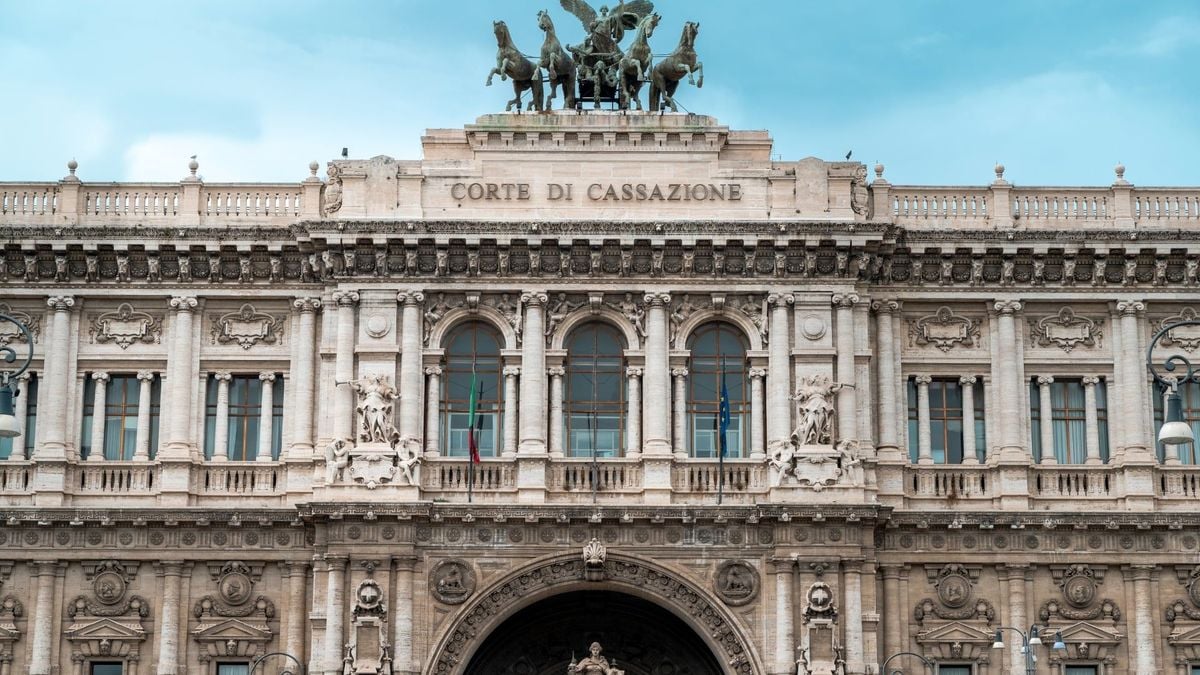
The Italian Supreme Court (Court of Cassation) has recently returned to the issue of cadastral compliance, a fundamental aspect in real estate transactions. It is, in fact, a central requirement for determining whether a property may be validly transferred inter vivos.
The ruling has naturally attracted the interest of all professionals operating in the real estate market.
With judgment no. 27531 of 15 October 2025, the Supreme Court, in the context of a dispute concerning a real estate sale and purchase deed, reaffirmed a principle previously expressed with regard to urban planning compliance. Specifically, it held that the validity of the sale deed does not depend on the property’s actual cadastral compliance, but solely on the presence, within the deed of sale, of a declaration by the seller or a professional certification affirming such compliance—except where the untruthfulness of the declaration or certification is evident.
The central passage of the judgment reads as follows:
“Just as with the nullity prescribed in cases of urban planning irregularities—where the provision of nullity is intended to sanction the failure to include in such deeds the details of the building permit, a permit which must, however, actually exist and be referable precisely to that property, so that, where the seller’s declaration in the deed sets out the details of the urban planning permit, real and referable to the property, the contract is valid regardless of whether the construction carried out conforms to or differs from the permit mentioned (Cass., Joint Sections, Judgment no. 8230 of 22/03/2019; to the same effect Cass., Section 2, Order no. 10360 of 19/04/2025; Section 3, Order no. 538 of 15/01/2020)—likewise, in the case of cadastral inconsistency, nullity is imposed where the deed lacks a declaration or certification of compliance referable to the property, irrespective of the actual existence of such compliance.”
In other words, the invalidity of the deed depends on the absence of the declaration or certification of compliance, and not on the fact that the property is, in practice, non-compliant from a cadastral standpoint.
The judges of the Supreme Court, citing several precedents, further clarify that the relevant provision—Article 29, paragraph 1-bis, of Law no. 52/1985—has a primarily fiscal purpose. This rule was introduced to combat the phenomenon of so-called “ghost buildings”: structures never declared in the land registry or declared incorrectly (as to use or size), regardless of whether such situations stem from lawful building works.
It follows that it is sufficient for the deed to contain the declarations required by law, even if, hypothetically, they do not fully correspond to the truth.
Accordingly, even an inaccurate or false declaration or certification would be capable of preventing the nullity of the deed, except in cases of evident falsity—that is, where the inaccuracy is so manifest that it can be immediately recognized even by a person lacking technical expertise. In such a case, the declaration may be deemed non-existent and the deed is null.
In summary, the lack of correspondence to the truth of the declaration or certification does not affect the validity of the deed, which therefore remains effective. If, after execution, a substantial discrepancy emerges, the sale remains valid, without prejudice to any possible criminal or tax liabilities of the declarant.
From a civil law perspective, however, in the relationship between seller and buyer, such discrepancies may still be relevant—not in terms of nullity, but certainly with regard to contractual liability. They may constitute original defects of the contract or a breach of the seller’s obligations, giving rise to consequent claims for damages.

Explore the content you want to learn more about
Editorials
Editorials by the President Ilario Antonio Toscano
13 NewsObservatory
Real estate analysis, data, and trends
10 NewsGruppo Toscano World
All articles related to Gruppo Toscano world
24 News